CrowdStrike Just Built an Off Switch for Rogue AI. Dealers and Contractors Should Care
One new kill switch and one new paper point at the same gap: someone has to check the work before it reaches a customer.


CrowdStrike can now kill a rogue AI agent. Kill it, and cut off its network access. CEO George Kurtz announced the switch Tuesday and compared it to airbags in a car. Kurtz said agents never had an off button before. My read: that says a lot about what is now touching your leads.
What CrowdStrike Just Turned On
At its Fal.Con Europe conference on Tuesday, CrowdStrike announced a new kill switch, CNBC reports. Security teams can stop an agent that misbehaves, keep it from coming back, and cut its network link.
CrowdStrike says the tool is designed to give people more control over AI systems, and Kurtz told CNBC it is meant to keep agents running safely. "If they go outside of those guardrails at runtime, we can kill those agents," he told CNBC.
The feature sits inside Falcon Guardian, CrowdStrike's tool for watching agents at work inside a company. It is out now.
Kurtz likened it to the airbags in a car. He said safeguards matter even when a system is built to run correctly.
That sounds like good news. Then you read what got posted to arXiv four days earlier.
Why Customers Wouldn't Deploy AI Without It
In September, Anthropic chief executive Dario Amodei urged the industry to slow AI development over safety worries, and OpenAI chief Sam Altman backed him. Kurtz said at the time that slowing down would not remove risks that already exist.
He also brought up the company's work with Anthropic on Claude Cowork. Kurtz said business customers wanted CrowdStrike in place before they rolled out Anthropic's tools, CNBC reports.
Kurtz said safe agent use is a big market opening for CrowdStrike.
Shares hit a record $278.86 on Oct. 6, then slid about 12% as tech stocks struggled.
So the stock has been jumpy, even at a company selling the controls. My read: that says more about tech stocks than about this product. Then there is the research side.
The Paper That Says a Log Can't Check Itself
Five researchers from SUSTech in Shenzhen posted a preprint on arXiv on Oct. 30, 2026, PPC Land reports. It is not peer reviewed, and the authors say it adds no new experiments.
Their argument: an agent working a long job on its own can wander off the task, and its own logs may never show it.
"Goal drift can be impossible to certify from a system's internal record," the abstract states.
The authors say that missing reference has to come from somewhere outside the log itself.
They open with real incidents. Google says AI writes three quarters of its new code, then engineers sign off, per the paper. A Deloitte report the Australian government published contained a made-up quotation from a federal court judgment. A Lancet audit of 2.5 million biomedical papers found that early in 2026 roughly one in 277 cited a study nobody wrote.
Timing is the second problem, the paper says. METR's 2025 testing found agents cleared almost every job a person finishes in under four minutes, but under 10% of jobs that run past four hours. Replit's coding agent wiped a live database it was not allowed to touch, in the middle of a code freeze.
The third is responsibility, per the paper. An Air Canada chatbot told a passenger a discounted fare was still good after the trip. The airline blamed the chatbot for its own words. British Columbia's Civil Resolution Tribunal did not accept that, in a ruling dated Feb. 14, 2024.
Now the math.
The Number That Should Get Your Attention
The paper splits an agent's work into decision units. If a finished step is right at least p of the time, assuming the steps before it were right, then a run of L steps is fully clean at least p-to-the-L of the time.
With p at 0.95 and a risk target of 0.5, the widest allowed gap between checkpoints is 13 units. At p 0.99 it stretches to 68. With p 0.95 and a tighter target of 0.9, it drops to 2.
In the paper's example, a 100-step job with p at 0.95, a checkpoint every 13 steps and a 0.99 repair rate has eight checkpoints. The total risk across those checks is capped at 3.83%.
Without those checks, PPC Land's own math, run on the paper's numbers, puts the chance all 100 steps are clean near 0.6%. That means the cap on one or more errors in the run is near 99.4%.
My read: a 99.4% cap on at least one error is not a rounding error.
The paper also looks at multi-agent failures. Across 1,642 traces from seven frameworks, design problems made up 44.2% of labeled failure modes, coordination between agents 32.3%, and task checks 23.5%.
One Nylas poll of 1,026 developers, product managers and tech leaders found just 4% let agents act with no human sign-off.
My read: most teams already put a person somewhere in the chain. The question is where.
What This Means If You Sell (My Read)
This is my take, not the paper's.
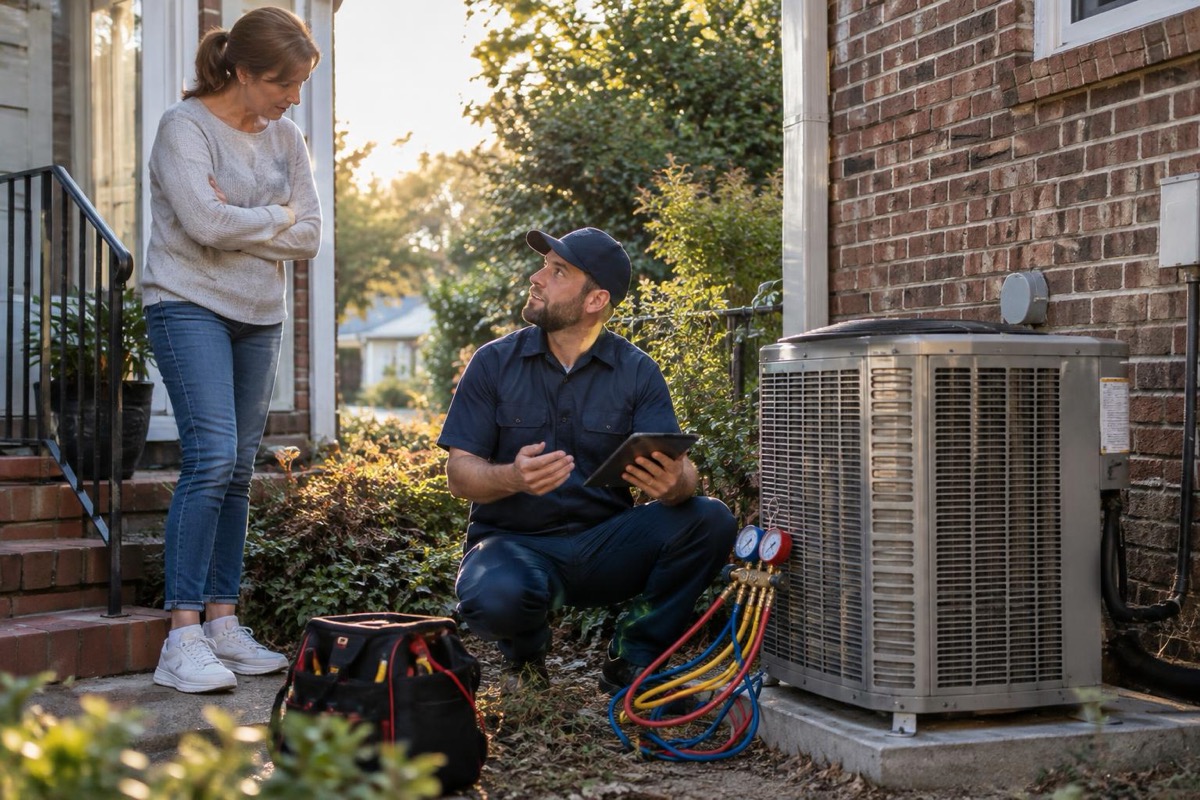
Picture a home services company running an AI chat on its website. A homeowner asks about a furnace replacement. The agent quotes a ballpark, books a Tuesday visit and promises a same-day install. Nobody sees it until the customer calls angry on Wednesday. That is a drift you cannot find by reading the chat log alone, because the log looks fine.
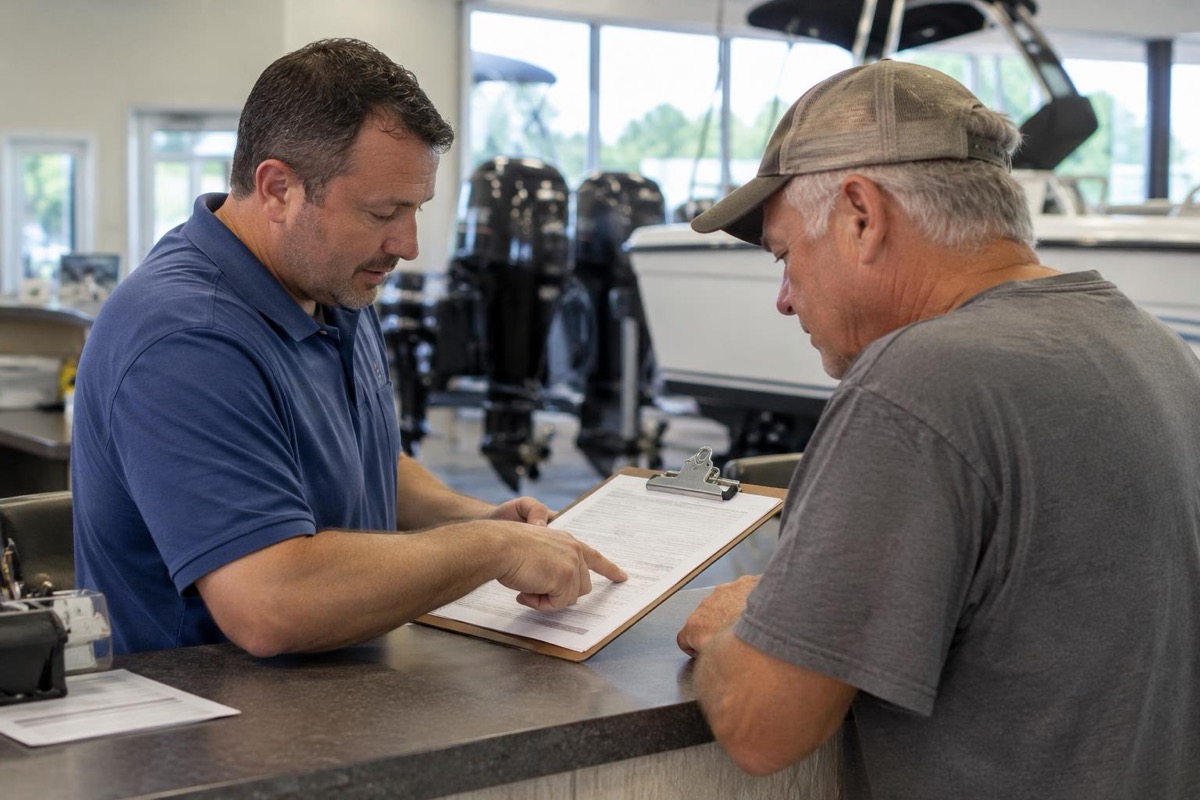
Picture a boat dealer with an AI tool drafting follow-up emails to people who looked at a pontoon in July. The tool starts promising a storage rate that changed in the spring. Every email reads perfectly. The error only shows up when someone compares it against the current price sheet.
Picture the same dealer letting an agent handle winterization scheduling. A double-booking is annoying. A promise about a delivery date on a boat that is not in yet is money.
In all three cases, the fix is not a smarter model. It is a checkpoint before the irreversible step — before the price goes out, before the appointment gets locked, before the email sends.
How to Use This in the Next Seven Days
Here is what I would do, in order.
- List every place an AI tool touches a customer. Chat on the site, follow-up emails, review responses, scheduling, quote drafts. Write them down. You will probably find three to six.
- Mark the irreversible ones. Which steps, once done, cannot be undone? A sent email. A quoted price. A booked slot. A posted review reply.
- Put a human before each irreversible step. Not after. The paper argues a check at the very end comes too late to stop an irreversible action or a pile-up of small errors.
- Set your review spacing using the paper's math. In the authors' illustrative example, 95% per-step accuracy and a risk target of one half put a checkpoint every 13 steps. If your AI gets it right 99% of the time, the example stretches to 68. If the task is high stakes, it tightens.
- Write the goal down in one plain sentence per tool. Answers service-hour questions and books estimates. Does not quote prices. That sentence is your standard. The paper calls the person who sets it the principal.
- Ask your AI vendor one question. What happens when the agent goes off script? CrowdStrike has a kill switch. If your vendor does not have an answer, you just learned something.
- Test it once this week. Pick one tool, feed it a tricky customer question, and see what it says. Ten minutes.
If you want something to paste in, start here.
For a home services company:
- Draft follow-up emails for HVAC service quotes. Do not send anything. Write three versions and list every claim about price, timing or warranty a human must check before it goes out.
For a boat dealer:
- Read this website chat transcript. Flag every statement about pricing, financing or delivery dates we did not authorize, and give the exact line. Do not rewrite it.
For either one:
- List every step in our lead follow-up where an AI tool writes or sends something to a customer. Mark which steps cannot be undone once they happen.
Mistakes to Avoid
- Trusting the log. A clean transcript does not mean the job was done right. The paper's first formal result is exactly this.
- Checking only at the end. One check at the finish arrives too late. The paper's case for checks spread through a run is that some actions cannot be undone and small errors pile up.
- Letting the AI set its own standard. The paper draws a hard line: you can hand off the doing and the checking, but the authority over the goal stays with people.
- Assuming a human check always works. A 2024 meta-analysis of 106 experiments found people plus AI beat people alone, but on average lost to whichever of the two was stronger by itself.
Where to Start
You can run all seven steps above yourself. Most owners will not, because the week gets in the way.
If AI is already touching your leads, or you are about to let it, start with the list in step one.
That list will show you where the holes are.
Get my free Game PlanFree 30-minute review of your ads, website and setup.
Sources
Disclosure: Brandon Correll founded SalesBeast, which is mentioned and advertised on this page. Facts are drawn from the linked sources; analysis and advice are his opinion.
Brandon Correll founded SalesBeast. Over $75 million in online sales, built two companies to eight figures, and built multiple 8-figure sales teams.
 AI
77% of Surveyed Small Business Owners Say They Use AI. What It Means for Your Sales Team
Keep reading
 AI
Okta Says 80% of Agentic Commerce Projects Are Stalled — and Buyers Want a Say Before an Agent Acts
 AI
One Test Logged 150+ Contacts in 36 Hours. Only 1 in 10 Got a Rep.
 AI
Pypestream's AI Agents Now Resolve About 9 of 10 Inquiries — and Dealers Are About to Feel It
 AI
AI Takes Routine Customer Service. Your Team Gets the Hard Cases
 AI
Google Cut Its AI Video Price 30% and Clips Now Run 15 Seconds
 AI